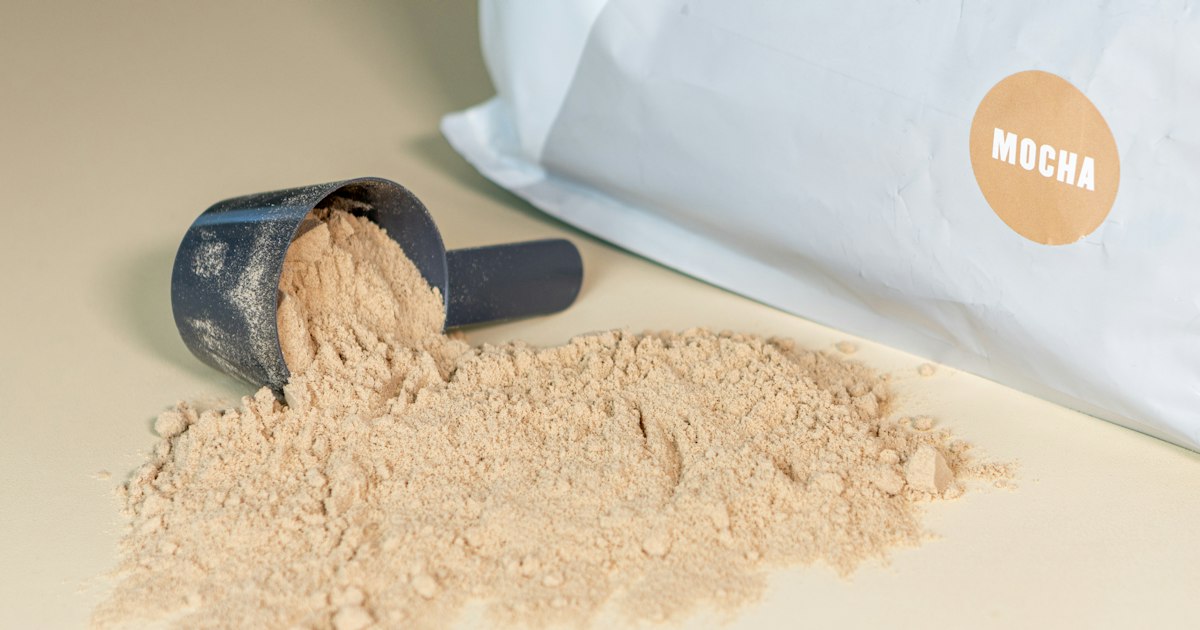
Beef protein: what it is and how it works

Beef protein appeared on sports nutrition shelves as an alternative to whey protein for those who don't tolerate dairy products or follow a paleo approach. The name evokes an association with steak, but the jar usually contains a completely different product. The editorial team examined what exactly goes into the powder, how it is made, and how it works in the body.
What beef protein is
Under the name «beef protein» (beef protein, beef protein isolate) sellers offer a concentrated protein powder derived from cattle raw material. Unlike whey, casein, or egg protein, it contains no milk proteins or lactose, so it is often positioned as an option for people with milk intolerance.
It is important to distinguish two concepts right away: beef as a food product and beef protein as a sports supplement. Lean meat consists mainly of muscle (myofibrillar) proteins — actin, myosin, and others. In contrast, a significant portion of «beef protein isolate» powders is made from meat-processing by-products — hides, tendons, cartilage, and bones, which are rich in connective-tissue proteins.
Because of this, in terms of composition many beef isolates are closer to hydrolyzed collagen or gelatin than to meat. Manufacturers do not always directly state the source of the raw material, so buyers should pay attention to the amino acid profile on the label: a high content of glycine, proline, and hydroxyproline reveals the collagen nature of the product.
There are also products made specifically from beef muscle tissue, but they are rarer and cost more. Therefore, when speaking of «beef protein» in general, we mean a whole group of supplements with quite varied biological value.
How it is made
The production technology of beef isolate consists of several stages. First, the raw material is cleaned of fat and foreign impurities, then ground and subjected to heat treatment in water. Next, the protein is broken down by enzymes into shorter peptides — this process is called hydrolysis.
Hydrolysis makes the product soluble in water and more neutral in taste, and also speeds up its digestion. After hydrolysis, the solution is filtered, concentrated, and spray-dried, yielding a fine powder. In the final stage, flavorings, sweeteners, and thickeners are added.
- Defatting and purification — removal of fat, which gives low calorie content and storage stability.
- Enzymatic hydrolysis — breaking down long protein chains into peptides.
- Filtration and concentration — increasing the protein share in the dry matter.
- Spray drying — producing a powder with a long shelf life.
It is precisely the intensive processing that explains why the finished powder contains virtually no fat, cholesterol, or carbohydrates, while its protein share is high. At the same time, along with fat and water, some beneficial components of meat are lost, for example part of the natural creatine and iron, so it is incorrect to consider the powder a full replacement for steak.
The quality of the final product strongly depends on the raw material and the manufacturer's controls. Conscientious companies publish a full amino acid chart and the results of independent laboratory tests, which makes it possible to assess the real composition of the supplement.

Amino acid composition and protein quality
For an athlete, the key indicator of a protein is its content of essential amino acids, above all leucine, which acts as a signal to trigger muscle protein synthesis. Whey protein is considered the benchmark precisely because of its high leucine share and rapid absorption.
A beef isolate of collagen origin contains noticeably less leucine and other branched-chain amino acids (BCAAs) than whey. Collagen also contains almost no tryptophan, so from a formal standpoint it is not a complete protein. Some manufacturers partly compensate for this by adding free amino acids to the composition.
Protein quality is assessed by the PDCAAS and DIAAS indicators, which take into account both amino acid composition and digestibility. Beef meat has high values of these indicators, whereas pure collagen has very low ones. Beef isolates occupy an intermediate position, and their real rating depends on how much muscle protein and how much connective-tissue protein they contain.
The table below compares the main characteristics of different protein sources on a qualitative level, without attempting to give exact figures, which vary substantially between products.
| Source | Completeness | Leucine | Lactose | Absorption rate |
|---|---|---|---|---|
| Whey isolate | Complete | High | Traces | Fast |
| Beef (meat) | Complete | High | None | Moderate |
| Beef isolate (hydrolysate) | Depends on raw material | Lower | None | Fast |
| Hydrolyzed collagen | Incomplete | Low | None | Fast |
Thus, «beef» on the label guarantees nothing on its own: in each case it is worth evaluating the specific product and its amino acid chart.
How it works in the body
After consumption, beef hydrolysate, like any protein, is broken down in the intestine into amino acids and short peptides, which are absorbed into the blood. Since the protein is already partly broken down in production, digestion occurs quickly, and the level of amino acids in the blood rises relatively early.
The amino acids are then used as «building material» for the synthesis of new proteins — muscle, enzymatic, structural. Leucine simultaneously activates the mTOR signaling pathway, which triggers muscle protein synthesis. This is exactly why the lower leucine content in collagen raw material may limit the anabolic signal of a single serving.
Studies with whole beef show that meat is an effective source for stimulating muscle protein synthesis. Symons and colleagues (2009) demonstrated that a moderate serving of lean beef (about 113 g, providing approximately 30 g of protein) maximally stimulated muscle protein synthesis in both young and older people. However, these data concern meat specifically, not powdered isolates.
For isolates, the key question is how well they match other types of protein in effect. A randomized study by Sharp and colleagues (2018) compared beef isolate, chicken protein, and whey after training and found no significant differences between them in changes in body composition over 8 weeks. We examine the evidence base in more detail in a separate article.
Glycine and proline, which are abundant in collagen raw material, are not «useless» in themselves: they are needed for the synthesis of connective-tissue collagen. However, speaking of a specific benefit of beef protein for joints and ligaments can, as of today, be done only with great caution.
Who needs it and why
The main audience for beef protein is people who, for various reasons, cannot or do not want to consume milk proteins. These are primarily people with lactose intolerance, for whom even whey isolate is unsuitable, and people allergic to cow's milk proteins (casein, beta-lactoglobulin).
The second group consists of supporters of paleo eating and diets that limit dairy products. For them, beef protein is a convenient way to increase daily protein intake without going beyond the chosen approach.
The third group is athletes who find it important to have different protein sources in their diet or who tolerate whey poorly from a digestive standpoint (bloating, discomfort). For them, beef isolate can be a convenient addition.
At the same time, for people who tolerate dairy products normally, beef protein offers no proven advantages over whey and usually costs more. For vegetarians and vegans it obviously is not suitable, and people with the rare alpha-gal syndrome (allergy to red meat) should consult an allergist.
Editorial conclusions
Beef protein is a hydrolyzed protein from cattle raw material, often with a large share of collagen. It contains no lactose or milk proteins and is absorbed quickly, but in leucine and essential amino acid content it usually falls short of whey.
For those who don't tolerate dairy products, it is a workable alternative, especially if you choose a product with a transparent amino acid chart. For everyone else it is more a matter of taste and variety than a way to gain an additional result.
The basis of progress remains a sufficient daily amount of protein from diverse sources and properly structured training, while a supplement is only a convenient tool.
We also recommend reading our materials on the evidence base for beef protein for athletes, on its available forms, and on how to properly choose a protein in case of lactose intolerance.
References
- Symons TB, Sheffield-Moore M, Wolfe RR, Paddon-Jones D. A moderate serving of high-quality protein maximally stimulates skeletal muscle protein synthesis in young and elderly subjects. J Am Diet Assoc. 2009;109(9):1582–1586.
- Sharp MH, Lowery RP, Shields KA, et al. The effects of beef, chicken, or whey protein after workout on body composition and muscle performance. J Strength Cond Res. 2018;32(8):2233–2242.
- Valenzuela PL, Mata F, Morales JS, Castillo-García A, Lucia A. Does beef protein supplementation improve body composition and exercise performance? A systematic review and meta-analysis of randomized controlled trials. Nutrients. 2019;11(6):1429.
- Jäger R, Kerksick CM, Campbell BI, et al. International Society of Sports Nutrition position stand: protein and exercise. J Int Soc Sports Nutr. 2017;14:20.
- Burd NA, Gorissen SH, van Vliet S, Snijders T, van Loon LJ. Differences in postprandial protein handling after beef compared with milk ingestion during postexercise recovery: a randomized controlled trial. Am J Clin Nutr. 2015;102(4):828–836.
- FAO. Dietary protein quality evaluation in human nutrition: report of an FAO Expert Consultation. FAO Food and Nutrition Paper 92. Rome: FAO; 2013.
Andriy Melnyk
A strength-sports coach and author of programs for beginner and intermediate levels. Writes about training planning.