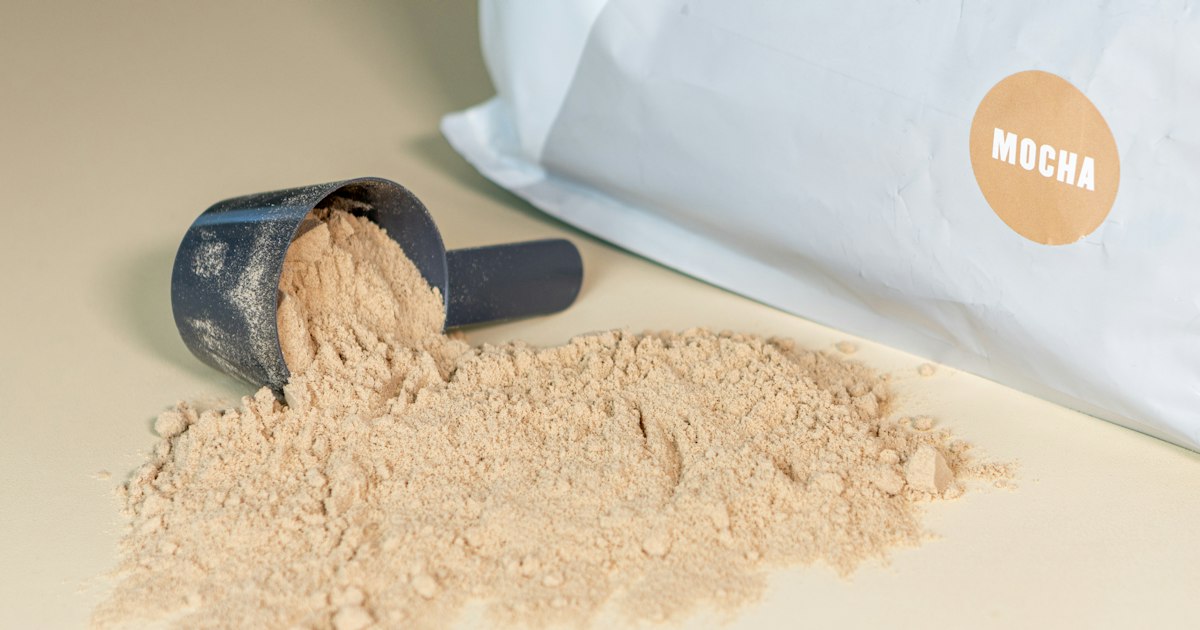
How to take Beef protein: dosage, timing, duration

Beef protein is an ordinary food supplement, so the rules for taking it follow the same principles as for any protein. But there is a nuance: because of the lower leucine content in many isolates, the serving size should be selected more carefully. The editorial team gathered practical recommendations based on position stands and studies.
First — the daily protein requirement
A protein supplement is not a separate «medication» but a way to cover part of the daily protein requirement. That is why the answer to the question «how much protein to drink» starts with calculating how much protein you need overall and how much you already get from food.
The International Society of Sports Nutrition (ISSN) in its 2017 position stand recommends 1.4–2.0 g of protein per kilogram of body weight per day for most people who train. A meta-analysis by Morton and colleagues (2018) showed that gains in lean mass from additional protein on average plateau at about 1.6 g/kg per day, while the upper bound of the confidence interval reached approximately 2.2 g/kg.
During periods of calorie deficit, when the goal is to preserve muscle while losing weight, some specialists advise aiming for the upper part of the range. For people who train recreationally, lower values are sufficient.
The practical algorithm is simple: assess your usual diet over a few days, count the protein from food, compare it with the target range, and cover only the difference with a supplement. It often turns out that one serving a day is enough or that a supplement is not needed at all.
| Body weight | 1.4 g/kg | 1.6 g/kg | 2.0 g/kg |
|---|---|---|---|
| 60 kg | 84 g | 96 g | 120 g |
| 75 kg | 105 g | 120 g | 150 g |
| 90 kg | 126 g | 144 g | 180 g |
How much protein in one serving
Studies with whey and egg protein have shown that in young people muscle protein synthesis after training is maximally stimulated by a serving of about 20–25 g of high-quality protein, while a further increase gives a small gain. Moore and colleagues (2009) described this dose dependence for egg protein, and for older people the optimal serving is probably higher.
The key variable here is leucine. To trigger muscle protein synthesis, it is important to get a certain amount of leucine per intake. Since a beef isolate of collagen origin has noticeably less leucine than whey, a larger protein serving may be needed for a similar effect — conditionally 30–40 g instead of 20–25 g.
The real amount of leucine is easy to check from the amino acid chart on the label: multiply the leucine content per 100 g of product by the mass of your serving. If the manufacturer does not provide an amino acid chart, that is already a reason to reconsider your choice.
- Typical manufacturer serving:1 scoop, usually 25–30 g of powder.
- Rational serving for a trained person:25–40 g of protein depending on the amino acid chart and body weight.
- Number of servings per day:1–2 to cover the protein deficit, the rest from food.
Schoenfeld and Aragon (2018) in their review proposed distributing protein across at least four intakes per day of about 0.4 g/kg each. A protein shake is convenient to use as one of these intakes.
When to take it
The concept of an «anabolic window» lasting 30 minutes after training, in its strict form, has not found confirmation. According to the ISSN position stand on nutrient timing, the total daily protein intake is more important, and intake within a few hours before and after training is a sensible but not critical approach.
Intake after training remains a convenient option, especially if you trained on an empty stomach or your last meal was long ago. Hydrolyzed beef isolate is absorbed quickly, so it is well suited precisely for this time.
Protein intake before bed has been studied mostly with casein: Snijders and colleagues (2015) showed that such intake combined with strength training promoted greater gains in muscle mass and strength. Beef hydrolysate is absorbed faster than casein, so for an evening intake it is advisable to combine it with food that slows digestion.
In the morning, a protein shake can be part of breakfast if regular food provides little protein. Intake on an empty stomach before training causes discomfort in some people, so here it is better to go by how you feel.
How to prepare it and combine it with food
Beef isolate dissolves well in water, so most people prepare the shake precisely with it. Water adds no calories and contains no lactose, which is important for those who chose beef protein because of milk intolerance.
To make the intake more complete, the shake can be supplemented with fruit, oat flakes, or nut butter in a blender. This way you get a balanced snack with carbohydrates and fats, which is especially appropriate after long workouts.
Unflavored powder can be added to porridge, puréed soups, baked goods, or pancakes. Moderate heating does not «destroy» the protein in a nutritional sense: the amino acids remain available for absorption, although the texture of the dish may change.
Prepare the shake right before consumption and do not store diluted protein in a warm place — this is an environment for bacterial growth. Keep dry powder in a tightly closed package in a dry place.
Duration of intake and typical mistakes
For a food protein there is no concept of a «course» in the sense there is for medicines. It can be consumed for as long as it is needed to cover a protein deficit in the diet, without mandatory breaks. A break is worth taking if unwanted reactions have appeared or if goals and diet have changed.
The most common mistake is to treat protein as a mandatory basis of the diet and replace full meals with it. Whole foods provide fiber, micronutrients, and vitamins that are absent or very scarce in the isolate.
The second mistake is to believe that more means better. Beyond the requirement, excess protein is simply oxidized as an energy source, giving no additional muscle gain but increasing the calorie content and cost of the diet.
The third — ignoring the composition. A «30 g» serving of powder may contain significantly less complete protein because of sweeteners, flavorings, and free amino acids. Count the protein and leucine specifically, not the mass of the scoop.
Editorial conclusions
The daily amount of protein matters more than any timing nuances: for most people who train, the benchmark is 1.4–2.0 g/kg per day, and protein merely covers the difference between this figure and the diet.
Because of the lower leucine content in many beef isolates, the serving may be slightly larger than for whey — go by the amino acid chart.
A convenient time for intake is after training or as one of the even protein intakes throughout the day; there are no mandatory courses or breaks for a food protein.
We also recommend reading our articles «What to combine beef protein with», «Beef protein: available forms and which to choose», and «Side effects of beef protein».
References
- Jäger R, Kerksick CM, Campbell BI, et al. International Society of Sports Nutrition position stand: protein and exercise. J Int Soc Sports Nutr. 2017;14:20.
- Kerksick CM, Arent S, Schoenfeld BJ, et al. International Society of Sports Nutrition position stand: nutrient timing. J Int Soc Sports Nutr. 2017;14:33.
- Morton RW, Murphy KT, McKellar SR, et al. A systematic review, meta-analysis and meta-regression of the effect of protein supplementation on resistance training-induced gains in muscle mass and strength in healthy adults. Br J Sports Med. 2018;52(6):376–384.
- Schoenfeld BJ, Aragon AA. How much protein can the body use in a single meal for muscle-building? Implications for daily protein distribution. J Int Soc Sports Nutr. 2018;15:10.
- Moore DR, Robinson MJ, Fry JL, et al. Ingested protein dose response of muscle and albumin protein synthesis after resistance exercise in young men. Am J Clin Nutr. 2009;89(1):161–168.
- Snijders T, Res PT, Smeets JS, et al. Protein ingestion before sleep increases muscle mass and strength gains during prolonged resistance-type exercise training in healthy young men. J Nutr. 2015;145(6):1178–1184.
Andriy Melnyk
A strength-sports coach and author of programs for beginner and intermediate levels. Writes about training planning.