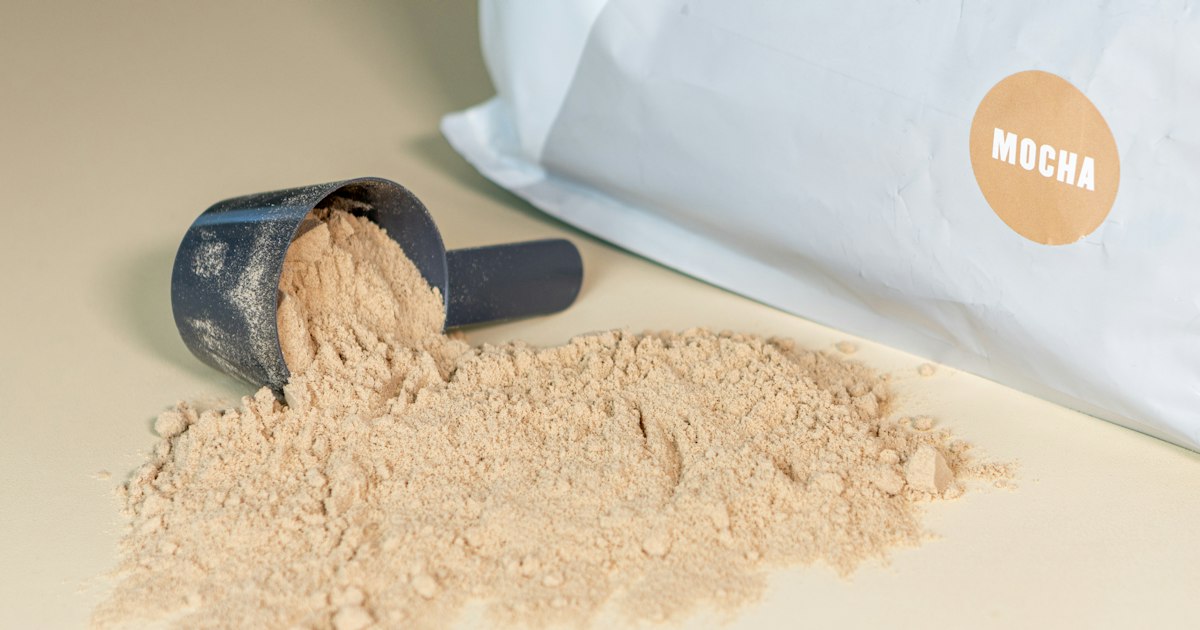
Myths about Beef protein

Quite a few beliefs have formed around beef protein — some of them born in advertising, some in gyms. The editorial team checked the most common claims against scientific data and divided them into myths, half-truths, and facts.
Myth 1: «It's meat in powder»
The image of a juicy steak on the jar creates the impression that inside is dried and ground meat. In reality, most beef isolates are made not from muscle tissue but from meat-processing by-products — hides, tendons, cartilage, bones, which are rich in collagen.
After hydrolysis and purification, mostly protein remains in the powder, the composition of which is determined by the raw material. If it is connective tissue, the profile will be dominated by glycine, proline, and hydroxyproline — typical amino acids of collagen, not of muscle proteins.
There are products made from beef muscle tissue, and their profile is indeed closer to meat. But even they lose fat, part of the minerals, and other components during processing, so they cannot be called «steak in a jar».
Verdict: a myth. What is worth checking is the amino acid chart, not the image on the packaging.
Myth 2: «More anabolic than whey»
Advertising texts sometimes claim that beef protein builds muscle more effectively because «muscle is built from muscle». This logic sounds intuitive but does not correspond to physiology: the body breaks down any protein into amino acids, and what matters is their composition and the rate of delivery, not their origin.
The systematic review and meta-analysis by Valenzuela and colleagues (2019) found no advantages of beef protein over other protein sources in body composition or strength. In the randomized study by Sharp and colleagues (2018), beef, chicken, and whey protein gave similar results.
Moreover, studies with whole beef did not show its advantage over milk: in the work of Burd and colleagues (2015), skim milk after training stimulated myofibrillar protein synthesis at least no worse than beef with the same amount of protein.
Verdict: a myth. Beef protein is an acceptable alternative, but not a «super-anabolic».
Myths 3–4: creatine and completeness
Myth 3: «Beef protein contains a lot of natural creatine».Raw meat is indeed a natural source of creatine, but the amount that can be obtained from food is small compared with the doses used in creatine monohydrate studies. During isolate production, creatine is largely lost. If a manufacturer adds creatine separately, this will be stated in the composition.
Thus, there is no point in counting on beef protein as a source of creatine. For those interested in creatine, a more effective and cheaper path is a separate creatine monohydrate supplement, the best studied in sports nutrition.
Myth 4: «It's a complete protein, like meat».Collagen contains no tryptophan and is very poor in some other essential amino acids, so on the protein quality assessment scale it has low values. An isolate of collagen origin may fall short of meat in completeness if not enriched with amino acids.
Verdict: both claims are myths or serious exaggerations. The real quality depends on the specific product.
| Claim | Verdict | Brief explanation |
|---|---|---|
| «Meat in powder» | Myth | The raw material is often connective tissue |
| «Better than whey» | Myth | The meta-analysis showed no advantages |
| «A lot of creatine» | Myth | Creatine is lost during processing |
| «Complete, like meat» | Depends on the product | Collagen is incomplete |
| «Harms the kidneys» | A myth for healthy people | Not confirmed by meta-analyses |
| «Heals joints» | Half-truth | The data concern other products |
| «Lactose-free» | Fact | Contains no milk components |
Myths 5–7: kidneys, joints, safety for everyone
Myth 5: «Protein wrecks the kidneys».The meta-analysis by Devries and colleagues (2018) found no differences in changes in kidney function between healthy adults on a high-protein and a regular diet. At the same time, for people with chronic kidney disease, limiting protein is a real medical recommendation. So for healthy people this is a myth, and for the sick a justified precaution.
Myth 6: «Beef protein heals joints and ligaments».This idea stems from the high content of collagen amino acids. There are studies with hydrolyzed collagen and gelatin: for example, Shaw and colleagues (2017) showed that gelatin enriched with vitamin C before exercise increased markers of collagen synthesis. But these results were obtained with other products and cannot be automatically transferred to beef isolate.
Myth 7: «It's a natural product, so it's safe for everyone».Natural origin does not guarantee safety. For people with alpha-gal syndrome, some allergies, phenylketonuria, or severe kidney diseases, beef protein can be harmful. Moreover, the quality of products on the market is not uniform.
Verdict: the fifth is a myth for healthy people, the sixth and seventh are half-truths with important caveats.
What is true about beef protein
Debunking myths does not mean the product is useless. Beef protein really does contain no lactose or milk proteins, so it is a real alternative for people who do not tolerate whey.
Hydrolyzed protein is absorbed quickly and dissolves well in water, which makes it convenient for intake after training. Combined with sufficient overall protein intake, it helps achieve the same results as other proteins.
- Contains no lactose or milk proteins.
- Absorbed quickly thanks to hydrolysis.
- Has a low content of fat and carbohydrates.
- Gives results comparable to other proteins, within a sufficient daily protein intake.
The main thing is to evaluate the product by its amino acid chart and the transparency of its composition, not by advertising promises. This is exactly what separates a rational choice from a marketing one.
Editorial conclusions
Most of the «special» properties of beef protein are marketing: it is not meat in powder, it does not surpass whey, and it is not a significant source of creatine.
At the same time, claims of harm to the kidneys of healthy people are also not supported by the data, and the absence of lactose is a real advantage for some consumers.
The rational approach is to view beef protein as an ordinary protein source with certain compositional features and to choose a product with a transparent amino acid chart.
We also recommend reading our articles «Benefits of beef protein for athletes: the evidence base», «Who should not take beef protein», and «Beef protein: available forms and which to choose».
References
- Valenzuela PL, Mata F, Morales JS, Castillo-García A, Lucia A. Does beef protein supplementation improve body composition and exercise performance? A systematic review and meta-analysis of randomized controlled trials. Nutrients. 2019;11(6):1429.
- Sharp MH, Lowery RP, Shields KA, et al. The effects of beef, chicken, or whey protein after workout on body composition and muscle performance. J Strength Cond Res. 2018;32(8):2233–2242.
- Burd NA, Gorissen SH, van Vliet S, Snijders T, van Loon LJ. Differences in postprandial protein handling after beef compared with milk ingestion during postexercise recovery: a randomized controlled trial. Am J Clin Nutr. 2015;102(4):828–836.
- Devries MC, Sithamparapillai A, Brimble KS, Banfield L, Morton RW, Phillips SM. Changes in kidney function do not differ between healthy adults consuming higher- compared with lower- or normal-protein diets: a systematic review and meta-analysis. J Nutr. 2018;148(11):1760–1775.
- Shaw G, Lee-Barthel A, Ross ML, Wang B, Baar K. Vitamin C-enriched gelatin supplementation before intermittent activity augments collagen synthesis. Am J Clin Nutr. 2017;105(1):136–143.
- Kreider RB, Kalman DS, Antonio J, et al. International Society of Sports Nutrition position stand: safety and efficacy of creatine supplementation in exercise, sport, and medicine. J Int Soc Sports Nutr. 2017;14:18.
- Commins SP, Satinover SM, Hosen J, et al. Delayed anaphylaxis, angioedema, or urticaria after consumption of red meat in patients with IgE antibodies specific for galactose-alpha-1,3-galactose. J Allergy Clin Immunol. 2009;123(2):426–433.
Andriy Melnyk
A strength-sports coach and author of programs for beginner and intermediate levels. Writes about training planning.