Spirulina: what it is and how it works
Spirulina is often called a «superfood» and «the algae of the future». It is sold as powder, tablets, and as a coloring for smoothies. The editorial team explains what spirulina actually is, what it consists of, which mechanisms of action are confirmed by studies, and where science ends and marketing begins.
What spirulina is
Spirulina is the general trade name for the dried biomass of cyanobacteria of the genus Arthrospira, primarily the species Arthrospira platensis and Arthrospira maxima. Despite the common name «blue-green algae», from a biological standpoint it is not an alga but a photosynthesizing bacterium. It got its name from the spiral shape of the filaments visible under a microscope.
In nature, spirulina grows in warm alkaline lakes. Historically it was collected and eaten in the area of Lake Chad in Africa and in the Valley of Mexico. Today, most spirulina is grown under controlled conditions — in open ponds or closed photobioreactors.
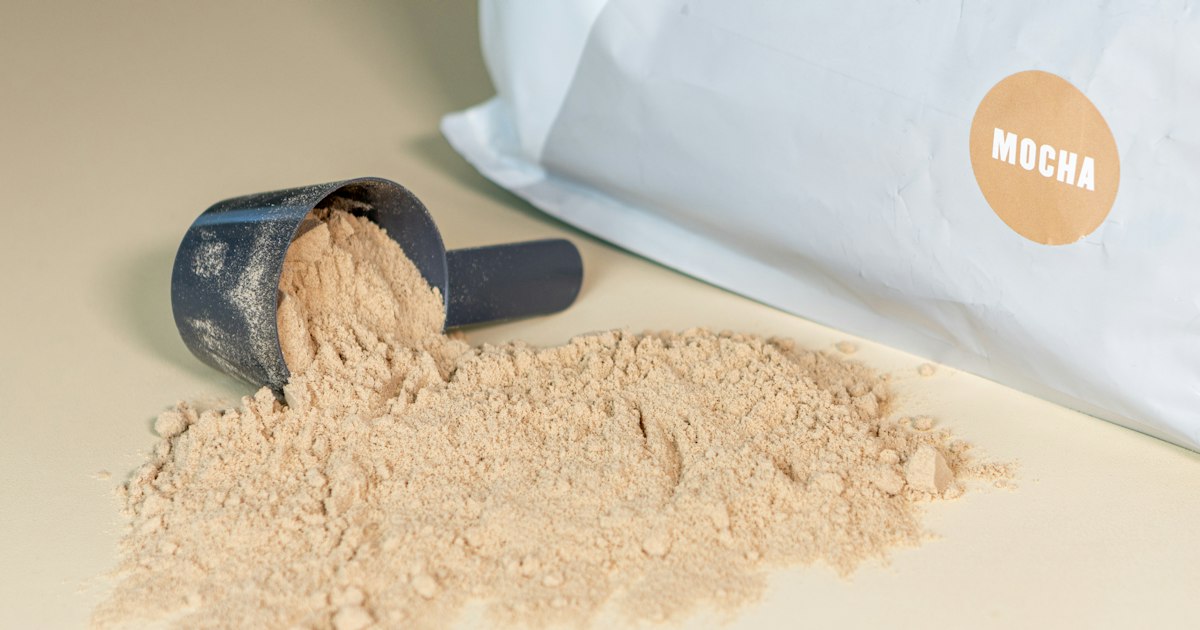
After cultivation, the biomass is filtered, washed, and dried, yielding a dark green powder with a characteristic «marine» smell. Tablets and capsules are made from it, as well as extracts of individual components, for example the pigment phycocyanin.
It is important not to confuse spirulina with chlorella — a green microalga that is a true plant cell with a hard cell wall. These products are often sold side by side, but they have different composition and properties.
Composition: protein, pigments, micronutrients
Spirulina is known for its high protein content — according to various sources, it makes up from 50 to 70% of the dry mass. However, this figure is impressive only as a percentage: a typical supplement serving is a few grams, so the real contribution to the daily protein requirement is small. For comparison, 5 g of spirulina will give approximately 3 g of protein.
The most interesting component from a pharmacological standpoint is phycocyanin — a blue pigment-protein involved in photosynthesis. It is associated with most of the antioxidant and anti-inflammatory effects described in experimental studies. Spirulina also contains chlorophyll, beta-carotene, and other carotenoids, gamma-linolenic acid, and iron.
| Component | Role | Practical significance in supplement doses |
|---|---|---|
| Protein | Building material | Insignificant at doses of a few grams |
| Phycocyanin | Antioxidant, pigment | The main candidate for biological activity |
| Beta-carotene | Provitamin A | A noticeable contribution |
| Iron | Blood formation | Can be noticeable, depends on the product |
| «Vitamin B12» | Mostly an inactive analog | Not a reliable source |
Vitamin B12 deserves a separate mention. Spirulina was long advertised as a source of B12 for vegans, but studies summarized in the review by Watanabe (2007) showed that most of the «B12» in it is pseudovitamin B12, inactive for humans. Therefore, spirulina cannot be relied upon as a source of this vitamin.
The composition of spirulina can vary substantially depending on the strain, cultivation conditions, and processing, so the figures on the labels of different manufacturers do not always match.
Mechanisms of action
Most of spirulina's mechanisms of action have been studied in cell cultures and animals. Phycocyanin in such models exhibits antioxidant properties, binding free radicals, and inhibits some inflammation pathways. There are data on its effect on the activity of antioxidant-defense enzymes.
In humans, the effect on the lipid profile has been studied best. The meta-analysis by Serban and colleagues (2016) showed that taking spirulina was associated with a decrease in total cholesterol, LDL, and triglycerides and an increase in HDL, although the studies were small and heterogeneous.
For athletes, the main interest is the antioxidant effect: intense exercise increases the formation of reactive oxygen species, and in theory spirulina could reduce oxidative stress and muscle damage. Small studies, for example Lu and colleagues (2006) and Kalafati and colleagues (2010), provide some confirmation of this hypothesis. We examine the evidence base in detail in a separate article.
It is worth remembering that antioxidants are not always beneficial for training adaptation: part of oxidative stress is a signal for the body to adapt. Therefore «more antioxidants» does not automatically mean «a better result».
Uses and practical aspects
In human studies, doses from 1 to 10 g of spirulina per day were usually used, most often a few grams over several weeks. In studies on athletes, the dose was about 6–7.5 g per day.
Spirulina can be added to smoothies, juices, yogurts, or taken in tablets. The powder has a specific taste, so many people choose the tablet form. For better tolerability, intake starts with smaller doses, gradually increasing to the desired amount.
- Powder — cheaper per gram, convenient for smoothies.
- Tablets and capsules — tasteless, but for a few grams many units are needed.
- Phycocyanin extract — a concentrated pigment, also used as a food coloring.
As a protein source, spirulina is impractical: to get a serving comparable to a protein shake, you would have to eat dozens of grams, which is unpleasant in taste and expensive. Its role is rather that of a functional supplement than a basis of nutrition.
Realistic expectations are small changes in individual health indicators, not a noticeable improvement in athletic results.
Safety and quality
The United States Pharmacopeia (USP) conducted a safety assessment of spirulina and concluded that on the whole it does not pose serious health risks provided the product is of proper quality (Marles et al., 2011). The main risks are associated not with spirulina itself but with contamination.
The best-known threat is microcystins, toxins produced by other cyanobacteria that can enter the culture when grown in open water bodies. Gilroy and colleagues (2000) detected microcystins in some blue-green algae supplements, especially those based on Aphanizomenon flos-aquae. Contamination with heavy metals is also possible.
Spirulina contains phenylalanine, so it is contraindicated for people with phenylketonuria. People with autoimmune diseases, as well as those taking immunosuppressants or anticoagulants, should consult a doctor because of the theoretical effect on immunity and blood clotting.
During pregnancy, breastfeeding, and for children, there is insufficient reliable data on safety, so in these situations the supplement should be taken only on a doctor's recommendation.
Editorial conclusions
Spirulina is the dried biomass of Arthrospira cyanobacteria with a high percentage of protein, the pigment phycocyanin, carotenoids, and iron, but it is not a reliable source of vitamin B12.
Best confirmed in humans is its moderate effect on the lipid profile; the antioxidant effects for athletes have a limited, though interesting, evidence base.
The key to safe intake is product quality: choose spirulina from manufacturers with laboratory control for microcystins and heavy metals.
We also recommend reading our articles «Benefits of spirulina for athletes: the evidence base», as well as materials on antioxidants in sport and on vitamin B12 in the vegan diet.
References
- Marles RJ, Barrett ML, Barnes J, et al. United States Pharmacopeia safety evaluation of spirulina. Crit Rev Food Sci Nutr. 2011;51(7):593–604.
- Watanabe F. Vitamin B12 sources and bioavailability. Exp Biol Med (Maywood). 2007;232(10):1266–1274.
- Serban MC, Sahebkar A, Dragan S, et al. A systematic review and meta-analysis of the impact of Spirulina supplementation on plasma lipid concentrations. Clin Nutr. 2016;35(4):842–851.
- Kalafati M, Jamurtas AZ, Nikolaidis MG, et al. Ergogenic and antioxidant effects of spirulina supplementation in humans. Med Sci Sports Exerc. 2010;42(1):142–151.
- Lu HK, Hsieh CC, Hsu JJ, Yang YK, Chou HN. Preventive effects of Spirulina platensis on skeletal muscle damage under exercise-induced oxidative stress. Eur J Appl Physiol. 2006;98(2):220–226.
- Gilroy DJ, Kauffman KW, Hall RA, Huang X, Chu FS. Assessing potential health risks from microcystin toxins in blue-green algae dietary supplements. Environ Health Perspect. 2000;108(5):435–439.
- Karkos PD, Leong SC, Karkos CD, Sivaji N, Assimakopoulos DA. Spirulina in clinical practice: evidence-based human applications. Evid Based Complement Alternat Med. 2011;2011:531053.
Andriy Melnyk
A strength-sports coach and author of programs for beginner and intermediate levels. Writes about training planning.