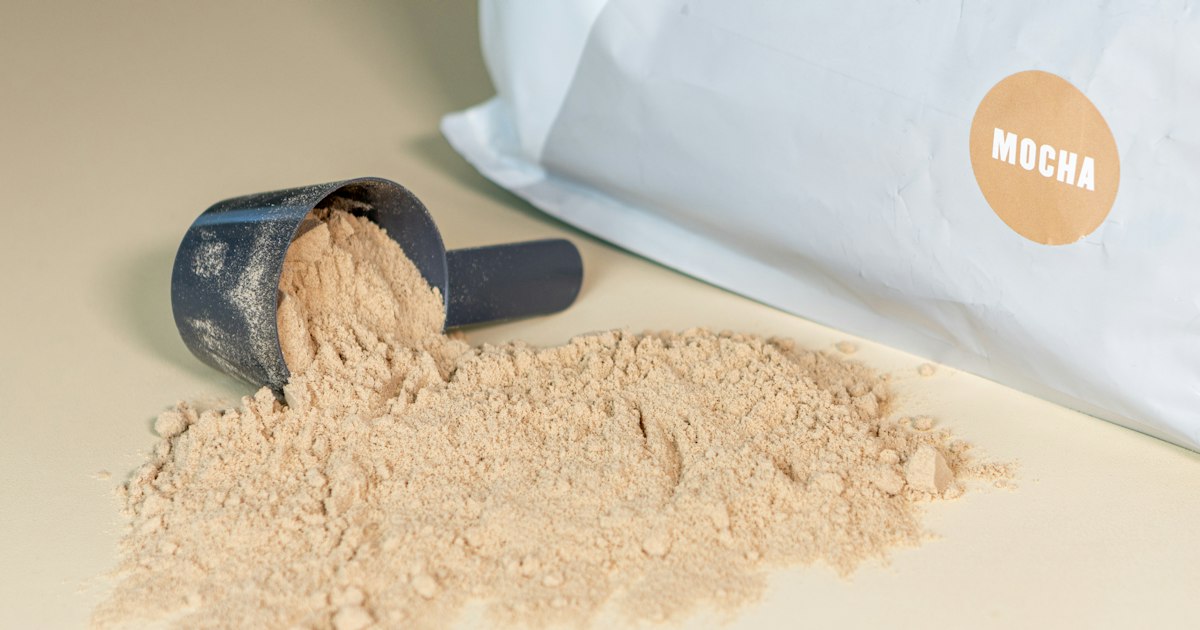
What to combine Beef protein with

Beef protein is rarely used on its own: it usually becomes part of a shake, a snack, or comprehensive nutrition around training. Well-chosen combinations can compensate for this protein's weak points and make intake more beneficial. The editorial team examined the most common combinations from the standpoint of the evidence base.
Why combine anything at all
A protein supplement covers the protein requirement but does not give the body energy in the form of carbohydrates, contains no fiber and most micronutrients. Therefore an isolated shake made with water is not a full meal but only its protein part.
In the case of beef protein there is one more reason: many isolates of collagen origin have a lower content of leucine and essential amino acids. Combining with other protein sources helps to even out the amino acid profile.
The third reason is convenience. A shake is a simple way to get several supplements with proven effectiveness at once, for example creatine, without increasing the number of separate intakes.
At the same time, it is important not to turn the shaker into a «shake of everything»: each component should have a clear purpose and scientific justification.
Carbohydrates for recovery
The joint position stand of the ACSM, the Academy of Nutrition and Dietetics, and Dietitians of Canada (2016) emphasizes the role of carbohydrates in restoring glycogen stores after training, especially when there is little time between sessions. Protein alone does not replace carbohydrates in this process.
Studies show that combining protein with carbohydrates after exercise can be useful, especially if the amount of carbohydrates is insufficient for optimal glycogen restoration. The review by Beelen and colleagues (2010) systematized these data and concluded that it is advisable to add protein to the post-workout intake, but carbohydrates remain the basis of glycogen restoration.
- A banana or other fruit — fast carbohydrates, potassium, an improved taste of the shake.
- Oat flakes — complex carbohydrates and fiber, greater satiety.
- Rice, potatoes, bread in a meal — full recovery after long workouts.
- Honey or dried fruit — for athletes with high energy expenditure.
For people who train to lose weight, carbohydrates in the shake should be counted in the overall calorie content. If the next meal is in an hour or two, a plain shake made with water is enough.
For endurance athletes and those who train twice a day, combining beef protein with carbohydrates after exercise is especially appropriate.
Improving the amino acid profile
The weak point of many beef isolates is leucine. There are several ways to compensate for this by combining with other products. The simplest, for those who tolerate dairy products, is mixing with whey protein in a proportion that gives a sufficient amount of leucine per serving.
For those who completely avoid dairy products, egg protein or plant proteins are appropriate. For example, pea protein has a relatively high content of leucine and lysine, while rice protein complements it with methionine. Combining different sources gives a profile closer to complete.
| What to add | Why | For whom | Comment |
|---|---|---|---|
| Whey protein | More leucine and BCAAs | Without milk intolerance | The simplest solution |
| Egg protein | A complete profile | Without dairy products | Powder or boiled eggs |
| Pea protein | Leucine, lysine | Without dairy products | May change the taste |
| Free leucine or EAAs | Strengthening the anabolic signal | Everyone | Bitter in taste, dose per the label |
Another option is adding free leucine or a complex of essential amino acids. This approach is used by manufacturers themselves in enriched formulas. The advantage is precise dosing, the drawback is a bitterish taste and a higher price.
Finally, the most natural way is to consume the shake together with food that contains complete protein: eggs, fish, meat. In that case the overall profile of the intake will be balanced regardless of the powder's composition.
Creatine, vitamin C, caffeine
Creatine.Creatine monohydrate is one of the best-studied ergogenic supplements. The ISSN position stand (Kreider et al., 2017) confirms its effectiveness for strength and high-intensity exercise and its safety in recommended doses for healthy people. A typical maintenance dose is 3–5 g per day, and it is convenient to add to a protein shake, although creatine works regardless of the timing of intake.
Vitamin C.The collagen amino acids abundant in beef isolates are used for collagen synthesis, and vitamin C is a necessary cofactor of this process. Shaw and colleagues (2017) showed that gelatin enriched with vitamin C an hour before exercise increased markers of collagen synthesis. There is no direct data for beef protein, but combining with fruit rich in vitamin C is logical and safe.
Caffeine.Coffee with protein is a popular morning option. Caffeine has a proven ergogenic effect and does not significantly affect protein absorption. However, people sensitive to caffeine should not drink such a shake in the evening because of the effect on sleep.
Vitamin D, omega-3, and other supplements do not interact directly with protein, so they can be taken separately as needed, as determined by a doctor or by test results.
Undesirable and pointless combinations
You should not combine beef protein with BCAAs in ordinary doses if you already get enough protein: separate BCAAs give no advantages over complete protein and only increase costs. An exception may be leucine specifically for «topping up» a weak profile.
Combining with «fat burners» of dubious composition carries real risks: such products sometimes contain banned or dangerous stimulants. We do not recommend using them either on their own or together with protein.
There is no point in mixing protein with a large amount of fats right before training — this slows digestion and can cause discomfort. After training, a moderate amount of fats is acceptable.
People who take medications should remember that some drugs (for example, certain antibiotics or iron preparations) are recommended to be taken separately from protein food. Clarify this in the drug's instructions or with a doctor.
Editorial conclusions
The most rational combinations of beef protein are with carbohydrates after training and with other sources of complete protein or leucine to compensate for a weak amino acid profile.
Creatine monohydrate is convenient to add to a shake, and combining with vitamin C is logical given the collagen nature of many isolates, although there is no direct evidence for this.
Avoid pointless combinations such as unnecessary BCAAs, and risky ones — with «fat burners» of unknown composition.
We also recommend reading our articles «How to take beef protein: dosage, timing, duration», «Beef protein: available forms and which to choose», and «Myths about beef protein».
References
- Thomas DT, Erdman KA, Burke LM. American College of Sports Medicine joint position statement: nutrition and athletic performance. Med Sci Sports Exerc. 2016;48(3):543–568.
- Beelen M, Burke LM, Gibala MJ, van Loon LJ. Nutritional strategies to promote postexercise recovery. Int J Sport Nutr Exerc Metab. 2010;20(6):515–532.
- Kreider RB, Kalman DS, Antonio J, et al. International Society of Sports Nutrition position stand: safety and efficacy of creatine supplementation in exercise, sport, and medicine. J Int Soc Sports Nutr. 2017;14:18.
- Shaw G, Lee-Barthel A, Ross ML, Wang B, Baar K. Vitamin C-enriched gelatin supplementation before intermittent activity augments collagen synthesis. Am J Clin Nutr. 2017;105(1):136–143.
- Jäger R, Kerksick CM, Campbell BI, et al. International Society of Sports Nutrition position stand: protein and exercise. J Int Soc Sports Nutr. 2017;14:20.
- Kerksick CM, Arent S, Schoenfeld BJ, et al. International Society of Sports Nutrition position stand: nutrient timing. J Int Soc Sports Nutr. 2017;14:33.
Andriy Melnyk
A strength-sports coach and author of programs for beginner and intermediate levels. Writes about training planning.